The Truth About Plastic Detoxification

Scott Gavura over at Science-Based Medicine writes about the desire to detoxify our bodies periodically:

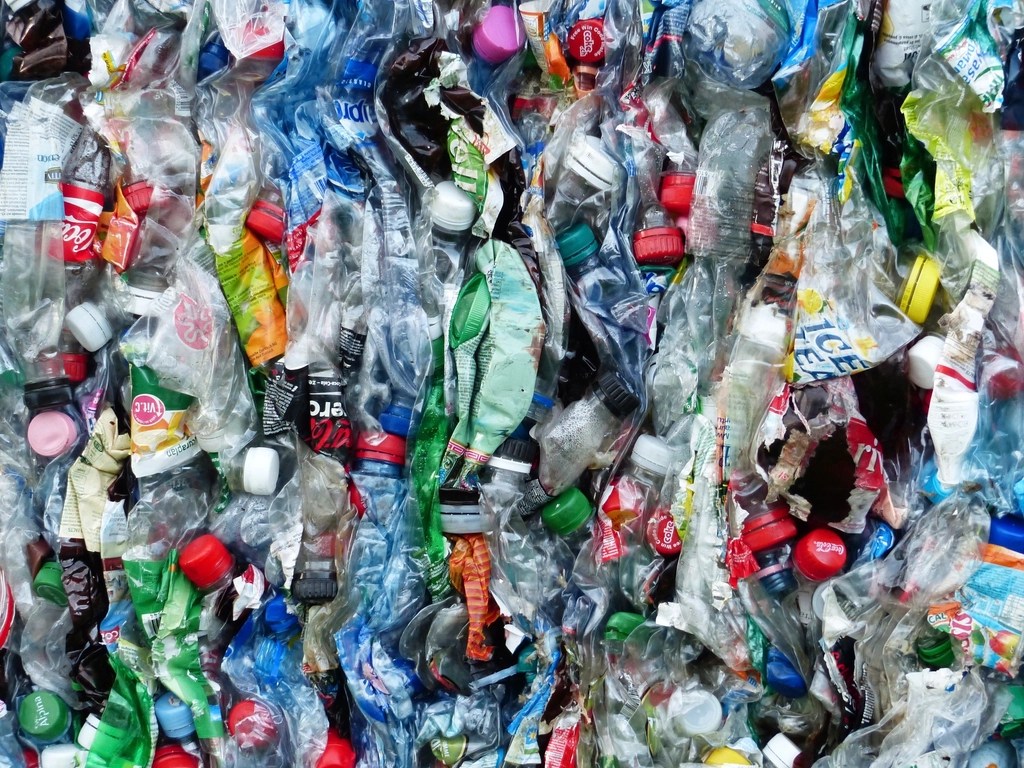
Free pile plastic bottles image“/ CC0 1.0

Headlines about plastic particles being detected in blood, lungs, placentas, and other tissues have been rapidly assimilated into the wellness ecosystem. Microplastics are tiny plastic particles that come from the breakdown of larger plastic pieces. Because microplastics are ubiquitous, persistent and easily dispersed, they are found in water, food and air – and our bodies. While their impact on human health continues to be studied, the message from wellness entrepreneurs has been simplified to: Plastics are accumulating inside you, and are causing you harm.

This is the perfect setting for detox marketing. Much like the Candida detox kits popular 20 years ago, supplements, binders, sauna protocols, and “plastic detox” programs now claim to remove microplastics (instead of yeast) from the body or reduce an individual’s “plastic burden.” Some businesses and clinics offer testing panels that purport to measure retained plastics, despite the absence of validated methods to do so in a clinically meaningful way. Unlike Candida, microplastics are a real environmental and health issue worthy of study. And that’s happening. But, just like older detox trends, a real scientific issue is already being used to justify claims that go far beyond the evidence.

What’s missing from the marketing claims is any evidence that these detox interventions actually work. Detecting microplastics in human tissues does not automatically imply that they can be selectively removed, or that proposed detox strategies meaningfully alter health outcomes. There is no credible evidence that supplements, saunas, chelation-like binders, or dietary protocols can “flush” plastics from the body. The leap to offering a personal detox solution is marketing, not evidence-based medicine.

The microplastics detox narrative we’re seeing also exploiting a familiar (and recurrent) misunderstanding of toxicology: the assumption that detection equals danger, and that identification necessitates purging. In reality, …

He’s justifiably skeptical about microplastics detoxification protocols. The time may come can rid ourselves of this contamination. But it’s not now.

Steve Parker, M.D.

Merry Christmas: Peace On Earth and Goodwill to All Men

From the Holy Bible (NIV), Matthew 22:36-40:

36 “Teacher, which is the greatest commandment in the Law?”

37 Jesus replied: “‘Love the Lord your God with all your heart and with all your soul and with all your mind.’ 38 This is the first and greatest commandment. 39 And the second is like it: ‘Love your neighbor as yourself.’[ 40 All the Law and the Prophets hang on these two commandments.”

Or if you prefer, click for a written account of The Christmas Truce of 1914.

HHS Working to End Insurance Pre-Authorization

I’ll believe it when I see it.

Health insurance pre-authorization, for example, is when your eye specialist recommends removal of your cataracts so you can see again, but your insurance company wants some clerk or administrator to review everything and either agree or disagree with your physician. If disagree, no eye surgery for you. Unless you’re willing to pay entirely out-of-pocket. Mind you, the clerk does not have a medical degree and has never examined you or spoken to you. Isn’t this one of the reasons Luigi Mangione executed that healthcare executive?

From American Greatness:

Health and Human Services (HHS) Secretary Robert F. Kennedy Jr. joined other federal health officials on Monday to promote an initiative to end the practice of healthcare insurance pre-authorization.

Kennedy was joined by Centers for Medicare & Medicaid Services Administrator Mehmet Oz as part of a roundtable discussion with insurers to discuss pledges made by the health insurance industry to streamline and reform the prior authorization process for Medicare Advantage, Medicaid Managed Care and Affordable Care Act Health Insurance Marketplace plans which account for most insured Americans.

The HHS Secretary commented on how when he joined the presidential transition team, he was told that the single most important thing he could do to improve the experience of patients across the nation was to “end the scourge of pre-authorization.”

Of course, the unsurers will argue that pre-authorization is necessary because those greedy doctors are recommending that surgery, MRI scan, specialty consultation, or physical therapy merely out of greed.

Steve Parker, M.D.

Isn’t That Special: Eliquis Costs $700 in Germany But $8,000 in the U.S.

From Karl Denninger, an article titled Enough of this Nonsense:

I’m talking about the basic economic question: Supply, demand and what happens when you allow someone to force another person to pay your bill.

I keep hammering on this and will until people stop running tropes whether out of sincere (but false) belief or some other reason.

Let’s take Eliquis.  Its a common medication and its expensive.  Roughly 3.5 million Americans take this drug and it is one of the most-commonly prescribed for people who have atrial fibrillation.  It appears to be reasonably effective in reducing the risk of strokes and heart attacks in people with that condition.

It is also about $8,000 a year in the United States without insurance and “insurance” forces those who do not have that condition to pay for those who do — including Medicare and Medicaid.

###

The common claim is that “if you cut that off those people will die” because they can’t possibly afford the price.

The claim is false.

In Germany the drug costs about $700 a year, so it is ten times as expensive in the United States.


Parker here. I know why Eliquis (apixaban) so much more expensive in the U.S. I wrote all about it in my latest book. Read Denninger for his opinion. (He’s smarter than me but was wrong about his predicted 2024 severe economic contraction. Making predictions is hard, especially when it’s about the future.)

Steve Parker, M.D.

Study Links Artificial Sweeteners to Increased Death Risk

Photo by Polina Tankilevitch on Pexels.com

A July 2024 article in the July 31, 2024, Nutrition Journal suggests that artificially sweetened beverage consumption may cause increase risk of death, particularly from cardiovascular disease. From the abstract:

Our systematic review and meta-analysis demonstrated a higher consumption of artificially sweetened beverages in relation to higher risks of all-cause and cardiovascular mortality, whereas no relationship of artificially sweetened beverages with cancer mortality was observed. Compared with the participants in the lowest category of artificially sweetened beverage intakes, those in the highest category had a 13% higher risk of premature death from any cause, and a 26% higher risk of CVD (cardiovascular disease) mortality. Each one additional serving increase in artificially sweetened beverage consumption was associated with 6% and 7% higher risk for all-cause and CVD mortality, respectively. In a dose-response meta-analysis, we also observed a linear association of artificially sweetened beverage consumption with CVD mortality, with a non-linear positive association of artificially sweetened beverages with all-cause mortality. Despite this, substitution of sugary sweetened beverages with artificially sweetened beverages was associated with a lower risk of all-cause and CVD mortality. Various sensitivity analyses and subgroups analyses demonstrated the robustness of the pooled associations. Per NutriGrade, quality of the overall evidence was scored moderate for CVD mortality and all-cause mortality.

Steve Parker, M.D.

When It Makes Sense to Go Without Health Insurance in the U.S.

The bike repair shop owner in this video is probably looking at one of the Obamacare insurance plans. They want him to pay $4,000 a year, the government is paying the insurer $7,000 yearly, and yet his deductible is $20,000. That means that if he develops a major medical problem or injury, he still has to pay $20,000 out of pocket before insurance pays a penny. Note that he is in his 30s and relatively healthy. He’s seriously thinking about going without insurance. When and if that major medical problem arises, he’ll just go on Medicaid.

He should think about putting money into a Health Savings Account.

One of the reasons I’m still working at age 71 is that my younger wife needs health insurance and we can get it through my employer.

Steve Parker, M.D.

PS: The books I write generate very little $. I’m just trying to help you guys get healthier and avoid the medical-industrial complex.

This Should Be Good

Bowl fragrant popcorn munch on“/ CC0 1.0

Crenshaw accepted the opportunity for a sit-down interview with Shawn Ryan, tentatively scheduled for Jan 2, 2026.

Shawn Ryan should have mentioned that he is not suicidal and that his vehicles are in good working order.

Someone in the comment section quoted Harry Truman: “Show me a man that gets rich by being a politician, and I’ll show you a crook.” That’s a legit idea even if Truman never said it.

Sadly, any major reform of the U.S. healthcare system will depend on federal and state legislators like Dan Crenshaw.

Steve Parker, M.D.

Plastic Poisoning: Hoax or Horror Show?

It’s getting harder for me to ignore microplastics. They contaminate our water, food, soil, oceans, and air. The guy in this video says the average adult brain contains as much invasive plastic as a typical plastic fork (5 grams?). These plastics are said to cause medical problems although I’m not sure of the strength of the evidence. Very few physicians know about this issue. The video speaker below talks about nanoplastics but in my experience “microplastics” is more often used. Something nano would be smaller than micro, a thousand times smaller if we’re using the metric system. Colloquially, nano may just be “quite a bit smaller” than micro. Video about this issue was published at YouTube Dec 3, 2025:

The speaker refers to a scientific article published at Nature Medicine on Feb 3, 2025: Bioaccumulation of microplastics in decedent human brains. Seems to me they should have used “nanoplastics” in the title instead of “microplastics.”

Not only are the microplastics allegedly bad for us, they are linked to “forever chemicals” which may mediate the badness. E.g., BPA-like chemicals (bisphenol A).

Are you worried about microplastics in your body?

Click this link to NRDC (National Resources Defense Council) for ten tips to keep plastic out of your body.

Steve Parker, M.D.

Update on December 15, 2025:

Katie Couric interviewed Dr. Matthew J Campen, one of the authors of the study referenced above and a toxicology professor at the University of New Mexico. He impresses me with the idea that his study’s findings are very preliminary and need verification by other labs, and that the implications for how we live today are not clear by any means. He speculates that the nanoplastics he finds in human tissue samples were ingested as nanoparticles that originated in landfills years ago. Discarded plastic waste deteriorated over time, breaking down to nanoparticles that contaminated groundwater and also ended up in agricultural products. Therefore, he suggests that there is not much individuals can do about avoiding nanoplastics except perhaps limiting meat consumption. Dr Campen notes that cutting down on our use of plastics now is more likely to help those a couple generations hence than to help us. He is highly skeptical about any current remedies that purport to remove nanoplastics from our tissues. Yet he suggests that our bodies may indeed have an intrinsic mechanism to reject (eject?) the particles.

Dr Campen does not impress me as a hair-on-fire bomb-thrower. Couric did and impressive job interviewing him.

I may start referring to freshly discarded plastics as macroplastics.

It’s Not Just For Adults: Mediterranean Diet May Benefit Children and Adolescents

From a study published in Journal of the American Medical Association Network in July of 2024:

The findings of this systematic review and meta-analysis of randomized controlled trials suggest that Mediterranean-based interventions are associated with reductions in systolic blood pressure, triglycerides, total cholesterol, and LDL-Cholesterol and an increase in HDL-Cholesterol among children and adolescents. These results underscore the importance of promoting healthy eating habits in youths, as these habits may lead to substantially improved cardiometabolic health, even during the early stages of life.

Steve Parker, M.D.

Trust the Science? ABC News Reports Possible Alzheimer Disease Mechanism FRAUD

MRI of brain

Science magazine has been investigating this for six months. This is disturbing, to say the least.

For several decades, a leading theory on the cause of Alzheimer disease is that a toxic protein called beta amyloid builds up in certain parts of the brain, impairing function. If that’s true, the next questions are 1) why does the protein accumulate, and 2) what can be done to prevent it.

From ABC News:

Allegations that part of a key 2006 study of Alzheimer’s disease may have been fabricated have rocked the research community, calling into question the validity of the study’s influential results.

Science magazine said Thursday that it uncovered evidence that images in the much-cited study, published 16 years ago in the journal Nature, may have been doctored.

***

More than $1 billion of government funding, through the National Institutes of Health, has been directed to amyloid-related Alzheimer’s research. While the investigation suggests that studies of Aβ*56 should be opened up to new scrutiny, experts said the entire theory shouldn’t be discredited.

Steve Parker, M.D.

PS: The Mediterranean diet is linked to lower risk of dementia.